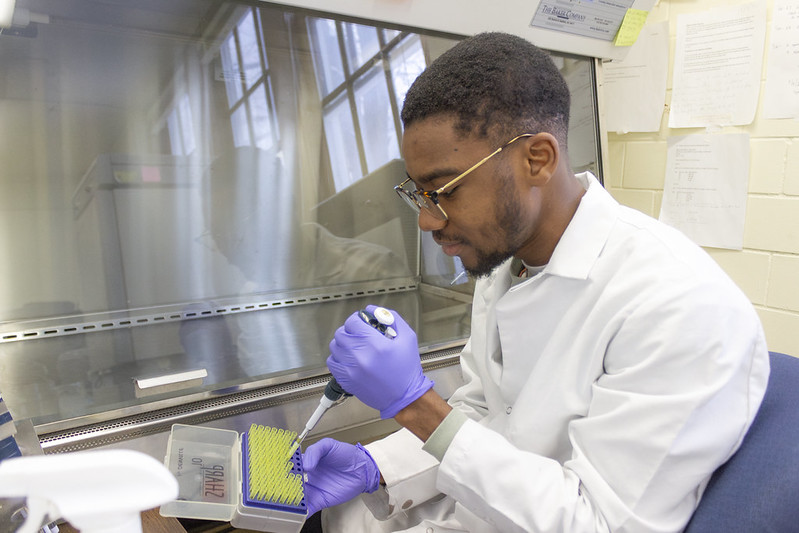
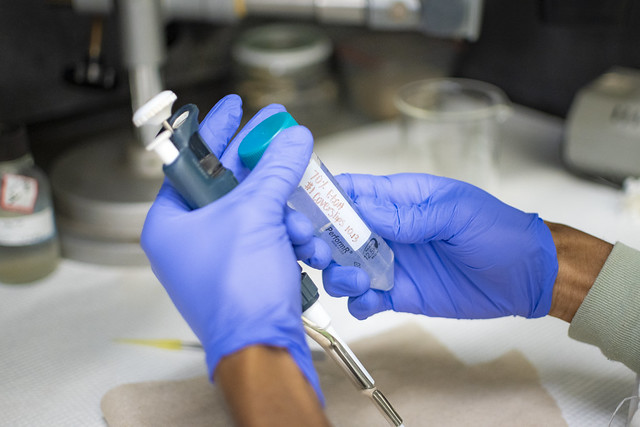
As a student at Michigan State University, I had the opportunity to spend last summer working with Henry Ford Health, where I analyzed DNA from more than 300 saliva samples collected in Ghana. Each sample represented a woman who chose to contribute something deeply personal, her genetic material, in the hope that it might help save lives.
That experience changed how I think about cancer research. I began to see that behind every dataset is a person, and that sometimes entire populations are missing from the data that shapes modern medicine.
As I learned more about triple-negative breast cancer, one of the most aggressive forms of breast cancer, I was struck not only by how disproportionately it affects women of African descent, but also by how little representation exists in the research meant to address it. In the United States, triple-negative breast cancer accounts for nearly 20 percent of breast cancer cases in Black women, compared to about nine percent in white women, according to the National Cancer Institute. What stayed with me most was not just the disparity. It was the realization that many of the tools we rely on to study and treat this disease may not fully reflect the populations most affected.
Through my research and conversations with patients, I began to notice patterns that extended beyond the lab. I saw what I came to understand as a representation gap, where people of African ancestry make up nearly 17 percent of the global population but less than three percent of participants in genomic studies. This made me question how broadly existing risk models can be applied.
I also observed a gap in care. Some patients described confusion after screenings and limited guidance on next steps, which can delay treatment. Others spoke about the difficulty of navigating care systems that were not always designed with their needs in mind.
At the same time, I became more aware of a gap in trust. Historical exploitation and lack of transparency continue to shape how communities view research and clinical trials. Hearing this directly from patients made it clear to me that these are not abstract issues. They influence whether people engage with the very systems meant to support them.
These experiences led me to think differently about what precision medicine means in practice. For a woman in Accra or in Detroit, a treatment plan based on incomplete data may not fully capture the biology of her disease. Over time, that gap can affect outcomes. In the United States, Black women are about 40 percent more likely to die from breast cancer than White women, despite having similar or lower incidence rates, according to the Centers for Disease Control and Prevention. Learning this in the context of my research made the issue feel much more immediate and personal.
At a scientific level, I also began to appreciate how limited datasets can slow discovery. Genetic variants that influence cancer risk and treatment response often differ across populations. When certain groups are underrepresented, important biological insights may be missed, not only for those populations, but for everyone.
During my internship, I transcribed focus group discussions with Ghanaian women. Hearing their perspectives added another layer to my understanding. Some described stigma surrounding cancer, while others expressed confusion about follow up care or hesitation toward clinical trials. These conversations helped me see that inclusion in research is not just about collecting data. It is also about building trust, respecting context, and ensuring that research translates into meaningful care.
Back at Michigan State, these experiences have continued to shape how I approach my work, both in the lab and in conversations with peers and mentors. Being part of a community that values both research and service has encouraged me to think not only about discovery, but also about how that discovery reaches people.
In response to what I observed, I began developing a mobile health platform called She’s Strong. The goal is to help bridge some of the gaps I encountered through risk assessment, symptom tracking and connections to care. For me, this project represents an attempt to connect research insights with the everyday experiences of patients, especially in communities that are often underrepresented.
Breast cancer research has made significant progress, but my experiences have shown me that those advances are not always equally shared.
As I continue my training at Michigan State, I am learning what precision medicine truly is. I’ve come to see precision medicine as more than technological accuracy. It also depends on having a broad and inclusive set of data so that the decisions we make truly reflect the people we aim to serve.
As I work toward improving outcomes for everyone, I see inclusion as something that must shape progress from the very beginning, not something we try to fix after the fact.